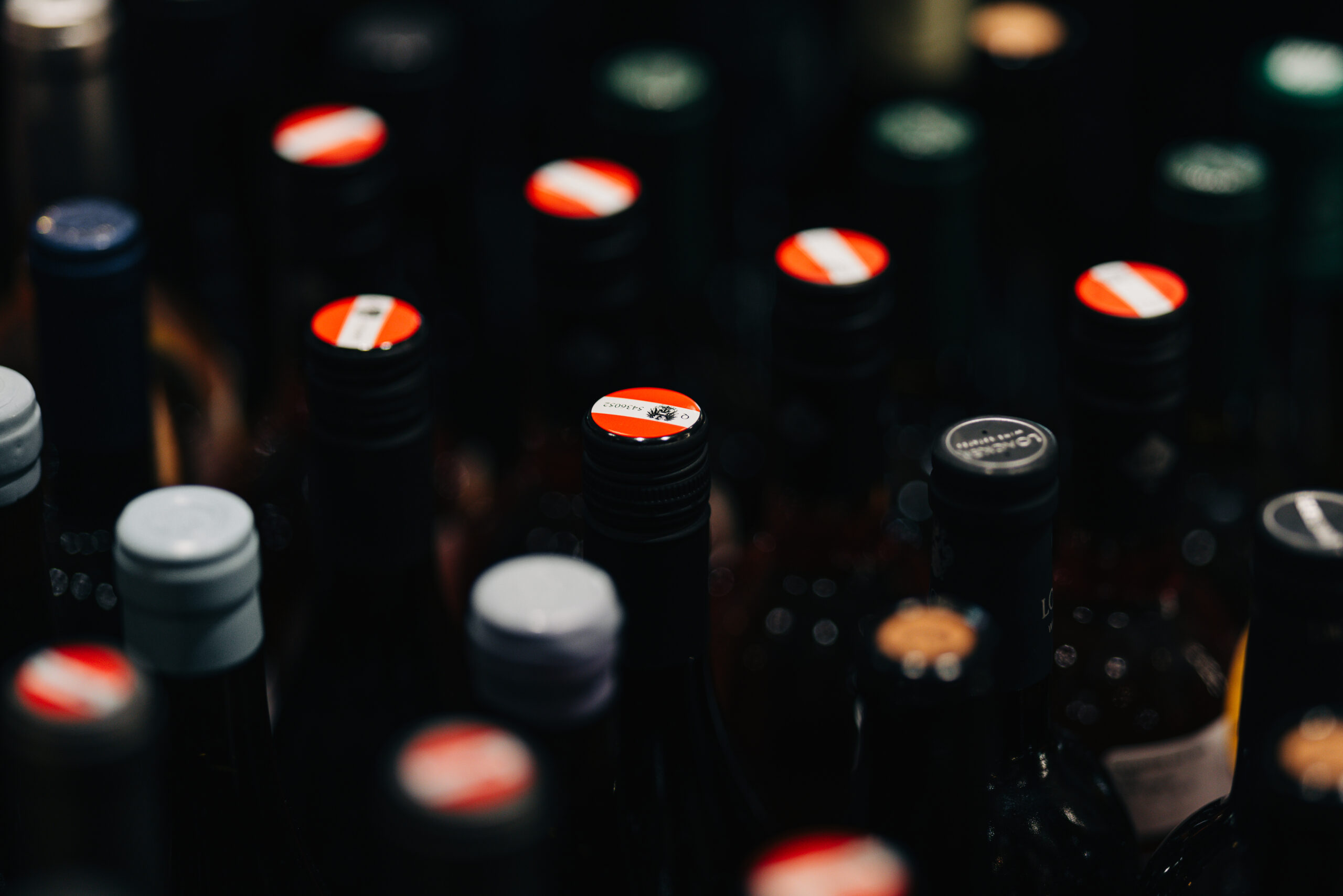
Photo: Banderole on top of wine bottles
© Austrian Wine / ManuGrafenauer
The Austrian wine market continued to face difficult conditions in 2025. In order to provide the best possible support for the domestic wine industry, the Austrian Wine Marketing Board (Austrian Wine) focused on campaigns in the home market, a global first initiative to engage younger age groups (20-35 years) and a record number of export measures. The Austrian Wine Annual Report 2025, now available in German, provides an overview.
Through 235 activities in Austria and abroad, Austrian Wine presented more than 10,000 wines from 991 Austrian wineries over the past year (selection).
“Our task is to support Austrian winegrowers as effectively as possible in their sales efforts, both at home and internationally. Strategically, this is based on three pillars: broad-based advertising campaigns in the domestic market, addressing young target groups and continued full commitment to export markets,” explains Austrian Wine CEO Chris Yorke.
Export: Targeted measures defend Austria’s market position
For more than 20 years, Austrian wine has recorded a sustainably positive export development, with particularly strong growth in the years following the Covid-19 pandemic. After this dynamic phase, a period of slight consolidation has recently set in. Above all, the very small 2024 harvest, around 20% below the average, is having a dampening effect on export performance in 2025. In addition, the strained macroeconomic situation in many EU markets and US tariffs in Austria’s second most important export market by value are making exports more challenging.
Despite these demanding conditions, current forecasts point to a decline in exports of only a mid single-digit percentage range. This development is being stabilised by several markets that continue to show very dynamic growth, most notably Canada, as well as Scandinavian countries, Japan and China.
The performance of these markets underlines that Austrian wine continues to offer international growth potential. In order to harness this potential, Austrian Wine implemented 140 export activities in the past year, including more initiatives with direct winery participation than ever before. Activities ranged from major international trade fairs such as ProWein Düsseldorf and Wine Paris to numerous tastings, promotions and media, trade and sommelier collaborations, including in Germany, Scandinavia, Canada, Japan, Switzerland, the Netherlands and the USA.
One finding was repeatedly confirmed: despite the globally restrained consumption environment, Austrian wines are meeting current taste preferences. As Yorke explains: “Our wines stand for high quality, environmentally conscious production and a freshness that is in strong demand internationally, as preferences are shifting away from overly heavy wines. It is therefore all the more positive that the 2025 vintage will once again offer fruity, easy-drinking wines in good volumes.”
Home market: Campaigns to stimulate wine sales
In the domestic market, Austrian wine proved to be a stabilising force in an overall declining environment. While total wine sales in the food retail sector fell by 5.2% in the first three quarters of 2025 and revenue declined by 2.5%, losses were significantly higher for imported wines than for domestic products. As a result, Austrian wine was able to further strengthen its leading position, achieving a market share of around 70% by volume and more than 75% by value in food retail.
Austrian wine also remains the clear market leader in the domestic hospitality sector. With a volume share of almost 90% and a value share of over 80%, it continues to hold the undisputed top position. At the same time, consumer restraint is evident: between January and September 2025, wine sales in the hospitality wholesale sector declined by 4.6%, with revenue down 0.9%. Sales levels therefore remain below those seen before the Covid-19 pandemic.
To counter these challenging market developments and stimulate wine sales, Austrian Wine has increasingly focused on broad-based campaigns in the domestic market. Following a major hospitality campaign in 2024, the 2025 campaign Rot kann auch cool (“Red can be cool too”) specifically supported sales of Austrian red wines. For 2026, a nationwide advertising campaign centred on the red-white-red quality banderole is planned, highlighting enjoyment, origin and quality in Austrian wine.
A global first initiative
At the same time, the new Austrian Wine brand rot weiss rosé (RWR), launched in autumn 2025, specifically addresses consumers aged between 20 and 35, the generation that will shape the future of the wine sector. With this approach, Austrian Wine is breaking new ground: internationally, there is currently no comparable initiative that systematically and independently introduces these target groups to wine at a nationwide level.
Outlook 2026
In 2026, Austrian Wine will consistently continue its strategic priorities. In the domestic market, the focus will be on safeguarding the high market shares of Austrian wine. To achieve this, Austrian wine will be promoted broadly and in a target-group-oriented manner across all consumer segments through the rot weiss rosé brand and the large-scale banderole campaign.
In terms of export development, the international wine fair VieVinum will take centre stage in 2026. Austrian Wine will invite around 1,000 international trade professionals to Vienna, enabling them to establish contacts with Austrian wineries and conclude business deals.