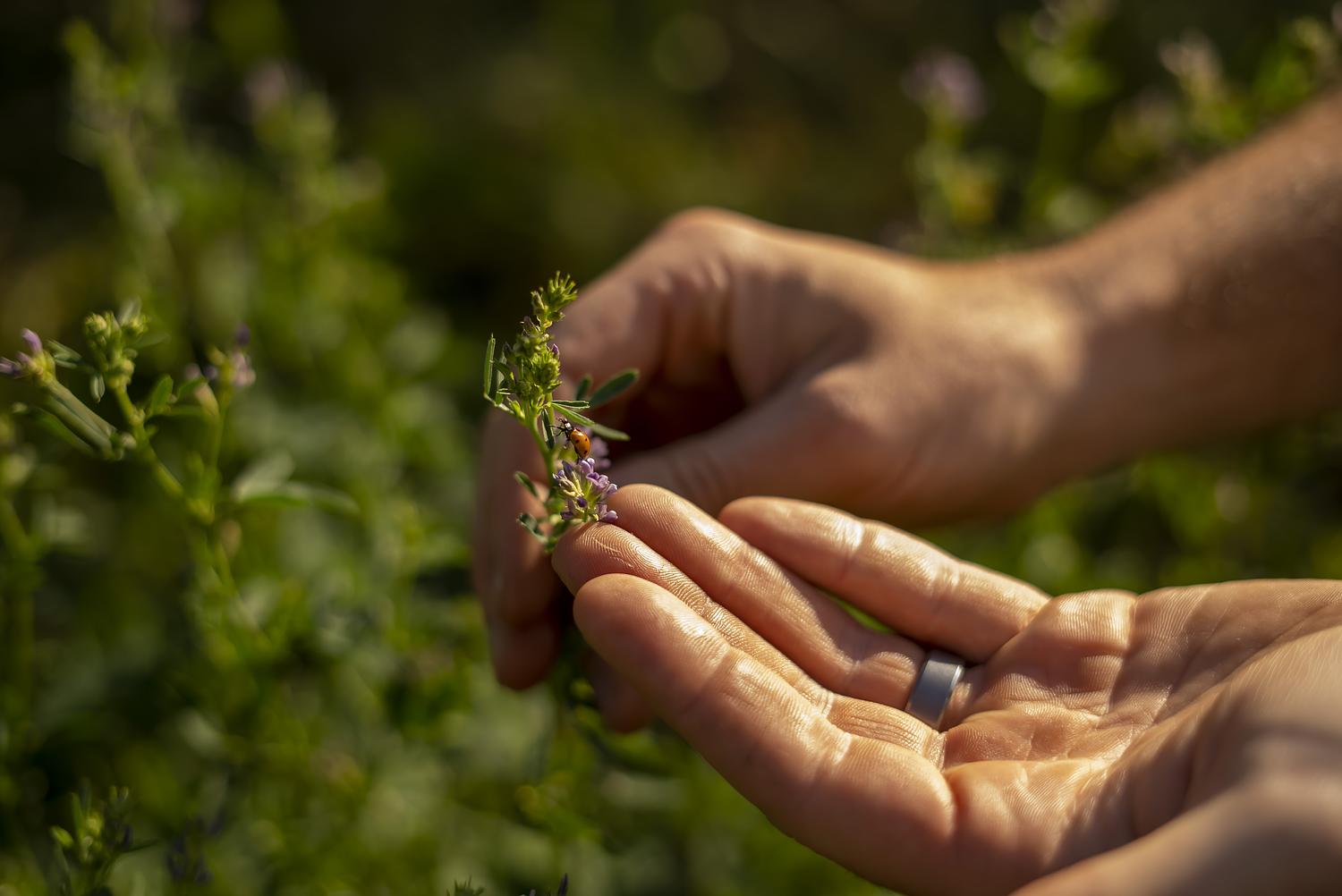
Photo: Winegrower in the vineyard with ladybug
© Austrian Wine / Robert Herbst
Austria continues to reinforce its position as an international leader in environmentally conscious viticulture. As many as 12,324 hectares of vineyards are already being cultivated in compliance with the extensive and independently controlled “Sustainable Austria” programme . This corresponds to 28% of the total area under vine in Austria – an all-time high for the country. In terms of organic viticulture, Austria also leads the way internationally, with 25% of the country’s area under vine being organically certified.
Today, more than 700 wine producers have achieved the “Sustainable Austria” certification. Between them, they cultivate more than 12,000 hectares of vineyards – in other words, more than a quarter (28%) of the total area under vine in Austria. Since 2019, the number of certified hectares has more than tripled. In the meantime, other environmental certifications have also become widespread. For example, 25% of the area under vine is certified as organic, making Austria the worldwide leader in this respect. More than 1 in 10 organic vineyards are also cultivated using biodynamic methods. These figures underline the importance of environmentally conscious viticulture in Austria.
“Sustainable Austria” is an internationally recognised label in the viticultural sector. It endorses clearly measurable sustainable practices in all areas of a winery’s business,” explains Chris Yorke, CEO of the Austrian Wine Marketing Board (Austrian Wine). “This also brings very tangible economic benefits. In some of our most important export markets, such as Scandinavia and Canada, credible environmental certifications are increasingly influencing purchasing decisions.”
The “Sustainable Austria” certification was launched in 2015 after being developed over a number of years by the Austrian Winegrowers Association (Weinbauverband Österreich) in association with a group of scientists. During the certification process, around 400 measures implemented by a winery are assessed in terms of their sustainability – ranging from the vineyard and cellar work to social and commercial aspects. The different measures are recorded with a digital tool that enables transparency and continuous development. The certification itself is carried out by independent inspection bodies (LACON or agroVet/Austria Bio Garantie – Landwirtschaft GmbH).
Measurable results along the entire value chain
The evaluation of all collected data shows clear, measurable results. Besides complying with the blanket ban on glyphosate, 84% of the certified vineyards also refrain from using any herbicides, and 80% grow their vines without insecticides. At the same time, renewable energy sources such as photovoltaic systems, biomass and green electricity cover almost 80% of energy consumption – a significant increase compared to earlier years. A total of 38 wineries operate completely self-sufficiently in terms of energy.
In addition, certified wineries are increasingly turning to environmentally friendly packaging solutions such as lightweight glass bottles and recyclable materials. The certification also supports regional partnerships and the positive impacts that these bring with them. For example, more than 70% of producers share machinery, which allows them to save resources and reduce emissions.